





YoungSolvers Webinar: From Fragment to Drug Candidate with SeeSAR

webinar

Wed, 14 Jul 2021, 16:00 CEST (Berlin)

Alexander Neumann

YoungSolvers Webinar: From Fragment to Drug Candidate with SeeSAR

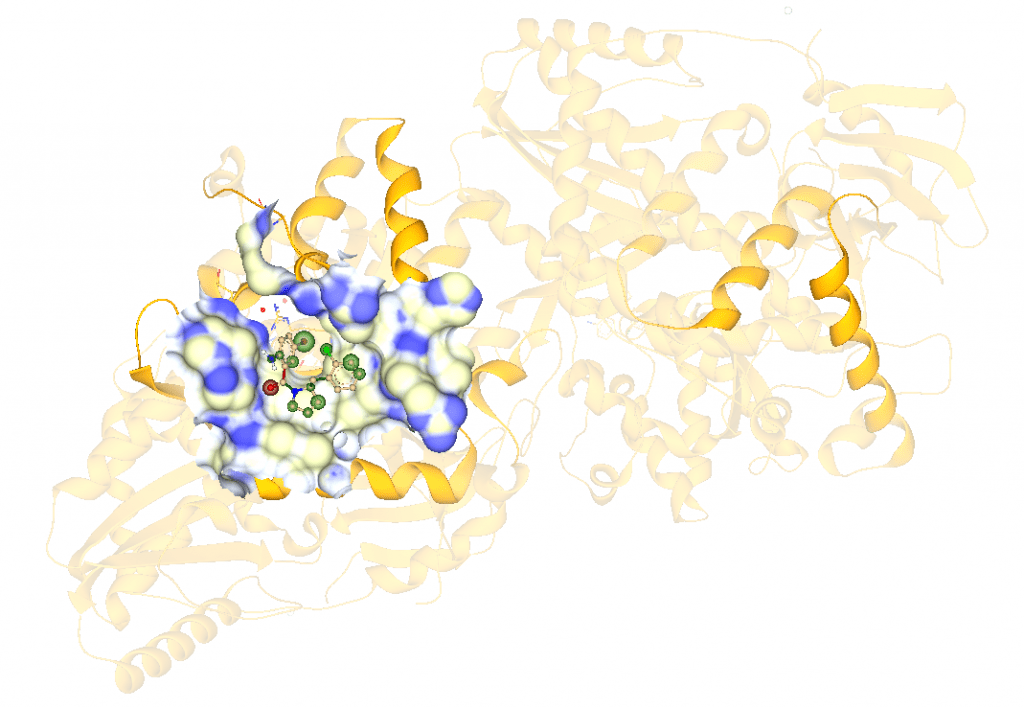
In this workshop you will learn how to evolve a small fragment to a full-fledged lead compound. We will cover the main aspects of structure-based modeling with the platform SeeSAR, including free energy approximations, conformational analysis, fragment growing, and many more. The workshop provides interactive insights into chemical properties, hypothesis testing, and the decision-making process. Furthermore, you will learn how to create meaningful graphics at publication quality level.

Level: Beginner
Current news

category
Software
Comparing the Performance of BioSolveIT and Alternative Technologies
August 4, 2026 09:21 CEST
Chemical Space DockingĀ® (C-S-D) is designed for computationally efficient structure-based exploration of ultra-large Chemical Spaces. But how does it compare with other approaches? When searching ultra-large Chemical Spaces, computational efficiency and algorithmic strategies are crucial if trillions of compounds are to be screened for potential candidates. The approaches used to...
Read on
Tool of the Month - infiniSee xREAL
July 27, 2026 10:57 CEST
This August, Trillions Fit on Your Desktop This August, explore Enamine’s largest compound catalog with infiniSee xREAL as BioSolveIT’s Tool of the Month. Most screening campaigns are limited less by ideas than by the size of the catalog you can search. infiniSee xREAL removes that limit. It is the only...
Read on
category
Publications
New Publication: Strategies for Identifying Molecules of Interest in Large Chemical Spaces
July 14, 2026 11:25 CEST
In collaboration with Pfizer, our team recently published a study in the Journal of Chemical Information and Modeling. The work represents fundamental research into molecular similarity, extended to ultra-large, combinatorial Chemical Spaces. Read the Full Publication (Open Access) Which Central Questions Were Addressed? Which similarity-score thresholds are meaningful? How do...
Read on