







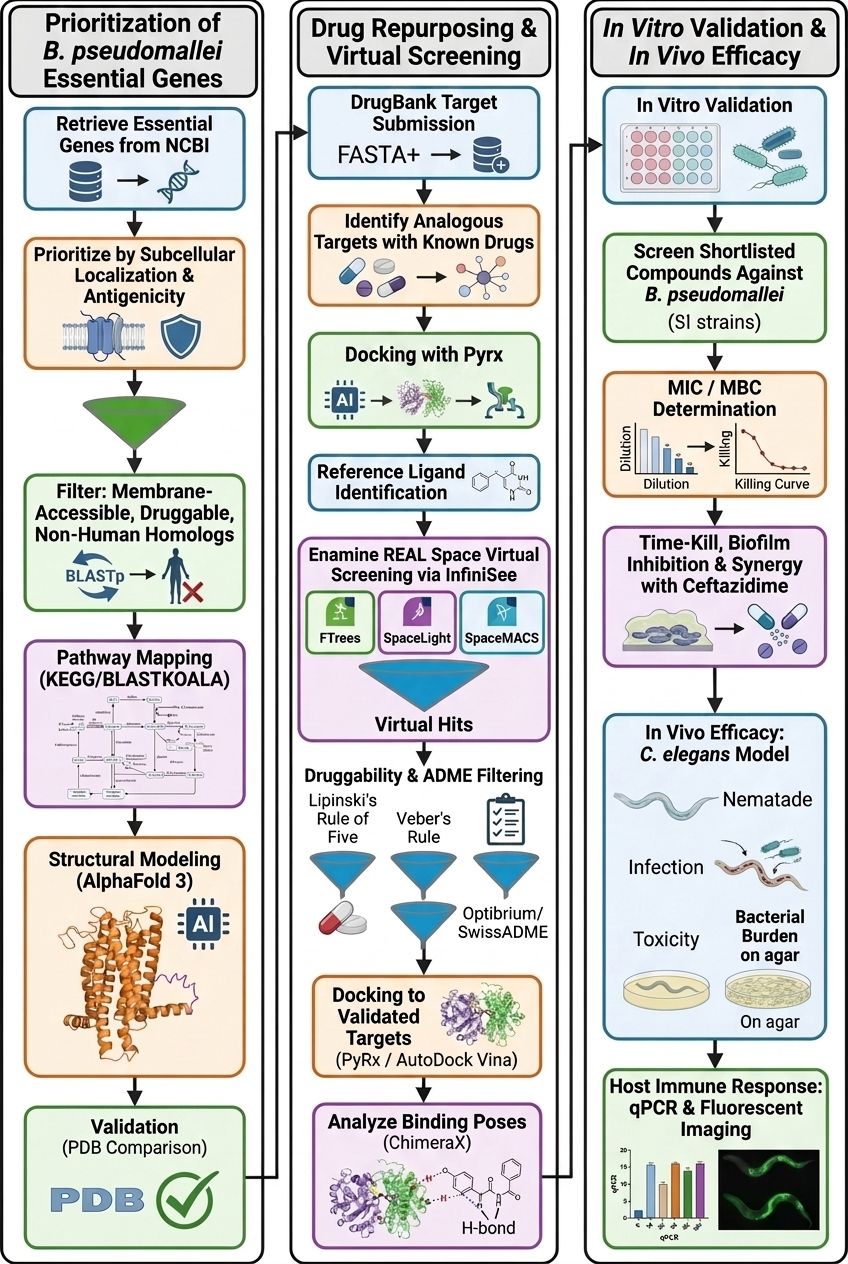
Melioidosis is caused by Burkholderia pseudomallei, which is resistant to most mainstay antibiotics. Slow progress in developing new antibiotics coupled with the ability of pathogen to cause deadly melioidosis and resistance to the first-line antimicrobials means that faster alternative therapeutics are of the highest priority. This project employs NCBI mining, BLASTp, and AlphaFold 3 alongside the DrugBank and DrugReposer databases to locate essential, druggable targets of B. pseudomallei. It also utilizes BioSolveIT’s infiniSee (FTrees, SpaceLight, SpaceMACS) to explore Enamine REAL Space for repurposed and new diligent structures. The candidates are then assessed through the ADME filtering and docking with PyRx, prior to undergoing in vitro MIC/MBC, time-kill, biofilm, and synergy tests against pathogen. Finally, in vivo tests will be performed in C. elegans infection model to assess both toxicity and the survival response of the host.
Anum intends to achieve the following milestones:
- Identifying potential repurposed drugs that can bind to and inhibit essential proteins of B. pseudomallei using advanced in silico screening
- To evaluate the antibacterial effects of the selected repurposed drugs in vitro, focusing on their ability to inhibit growth.
- To assess the safety and therapeutic efficacy of the identified drugs in vivo using the Caenorhabditis elegans infection model.