





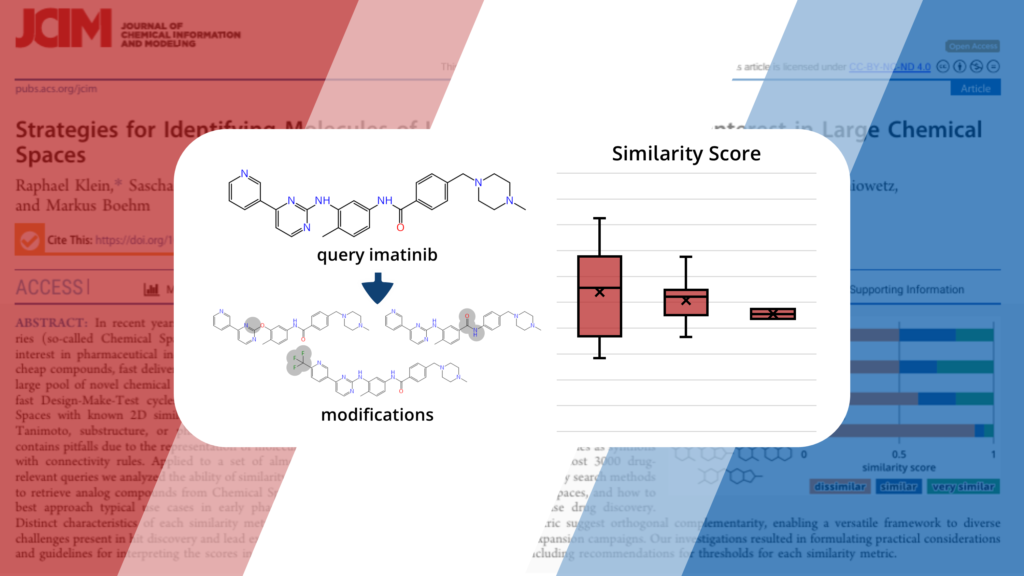
Strategies for Identifying Molecules of Interest in Large Chemical Spaces

webinar

Thu, 20 Aug 2026, 16:00 CEST (Berlin)

Raphael Klein, PhD, BioSolveIT, Germany

Strategies for Identifying Molecules of Interest in Large Chemical Spaces

As accessible compound catalogs continue to expand, the question of how to reliably extract relevant chemistry from billions to trillions and more of entries is becoming increasingly important. In particular, the often intransparent understanding of molecular similarity and degrees of relatedness makes it difficult to compare ranking lists or similarity algorithms with one another. In this webinar, we explore the extraction of relevant molecules from ultra-large Chemical Spaces. Building on our recently published study, we discuss both the opportunities and challenges of computational ligand-based screening, as well as the medicinal chemistry rationale behind different similarity metrics.
Current news

VAST Just Got Bigger — The September 2026 Update
September 17, 2026 09:00 CEST
More compounds. More chemistry. More opportunities to discover your next active. This August, explore Enamine’s largest compound catalog with infiniSee xREAL as BioSolveIT’s Tool of the Month. XtalPi has expanded its VAST Chemical Space, giving you access to almost six billion virtual product molecules built from over 25,000 carefully selected...
Read on
category
Events
Boston Event: Expanding Molecular Diversity with CORE
September 15, 2026 17:27 CEST
Chemical Space Exploration Meets AI in Boston BioSolveIT and Onepot.AI invite you to an evening of science, drinks, and conversation at D16, the speakeasy beneath Dillon’s in Boston. Join us on September 30, 2026, for two very concise presentations exploring how ultra-large Chemical Spaces and artificial intelligence can open new...
Read on
category
Events
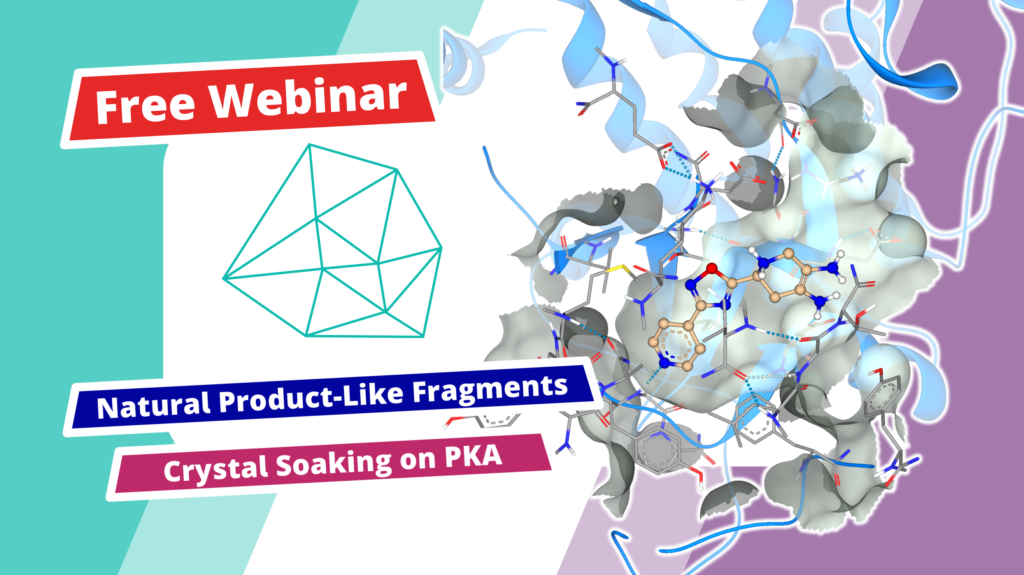
Beyond the Flatland: sp³-Rich Fragments Unlock Novel Kinase Chemotypes: Free Webinar!
September 15, 2026 10:40 CEST
Kinases are among the most intensively pursued target families in drug discovery, yet the chemical matter screened against them remains surprisingly narrow. Conventional kinase-focused libraries are dominated by flat, heteroaromatic compounds, while saturated, three-dimensional molecules stay largely underexplored. That narrow structural diversity makes it harder to find genuinely novel chemotypes,...
Read on