








Kinases are among the most intensively pursued target families in drug discovery, yet the chemical matter screened against them remains surprisingly narrow. Conventional kinase-focused libraries are dominated by flat, heteroaromatic compounds, while saturated, three-dimensional molecules stay largely underexplored. That narrow structural diversity makes it harder to find genuinely novel chemotypes, reach alternative binding sites, and build inhibitors with better selectivity and drug-like properties.
About the Webinar
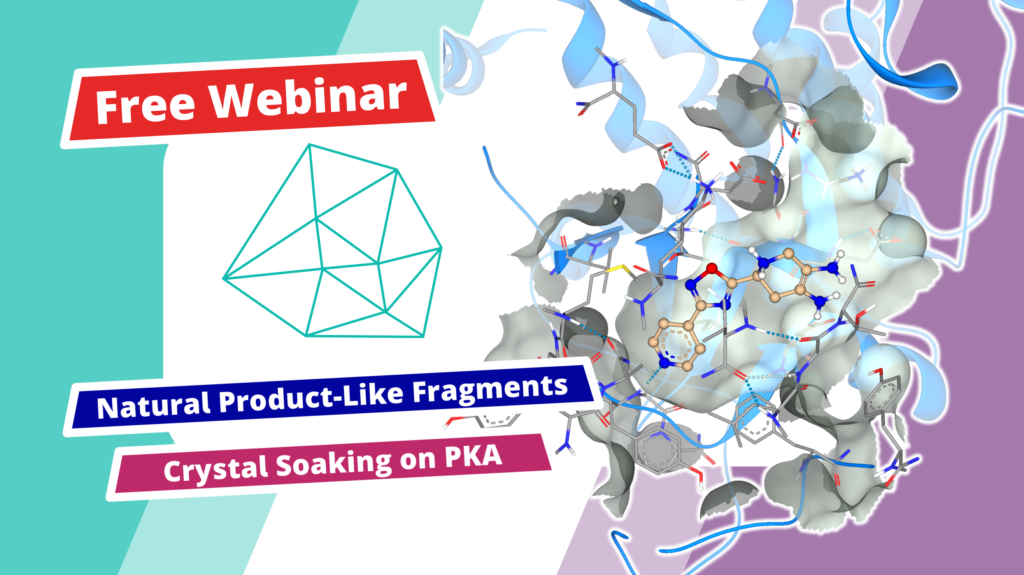
Dr. Serghei Glinca, CEO of CrystalsFirst, will present a recent study that investigates natural product-like fragments as a source of unconventional kinase-binding chemistry. Using a high-performance crystallographic soaking system for protein kinase A, the researchers resolved 36 fragment-bound structures at a hit rate of 41%. The fragments showed diverse binding modes across the ATP and peripheral sites, including a previously unexplored allosteric binding opportunity and an unexpected protein conformational change.
What You Will Learn
- How the crystallographic screening campaign against protein kinase A was designed and carried out.
- Which protein-fragment complexes proved most intriguing, and what they reveal about binding beyond the ATP site.
- Why saturated, spatially complex fragments occupy a distinct chemical space compared with established kinase binders.
- How three-dimensional, natural product-like fragments can open new avenues for kinase drug discovery.
Who Should Attend
Medicinal and computational chemists, structural biologists, and fragment-based drug discovery teams working on kinases or on expanding the three-dimensionality of their screening libraries.
Registration is free. Browse our upcoming and recorded sessions on the webinars page.