





The Exciting Story of Covalent Reversible Inhibition of Rhodesain, a Key Player in African Sleeping Sickness

webinar

Tue, 16 Nov 2021, 15:00 CET (Berlin)

Prof. Dr. Tanja Schirmeister, University of Mainz; Prof. Dr. Bernd Engels, University of Würzburg; Dr. Christian Kersten, University of Mainz; Natalie Fuchs, University of Mainz

The Exciting Story of Covalent Reversible Inhibition of Rhodesain, a Key Player in African Sleeping Sickness

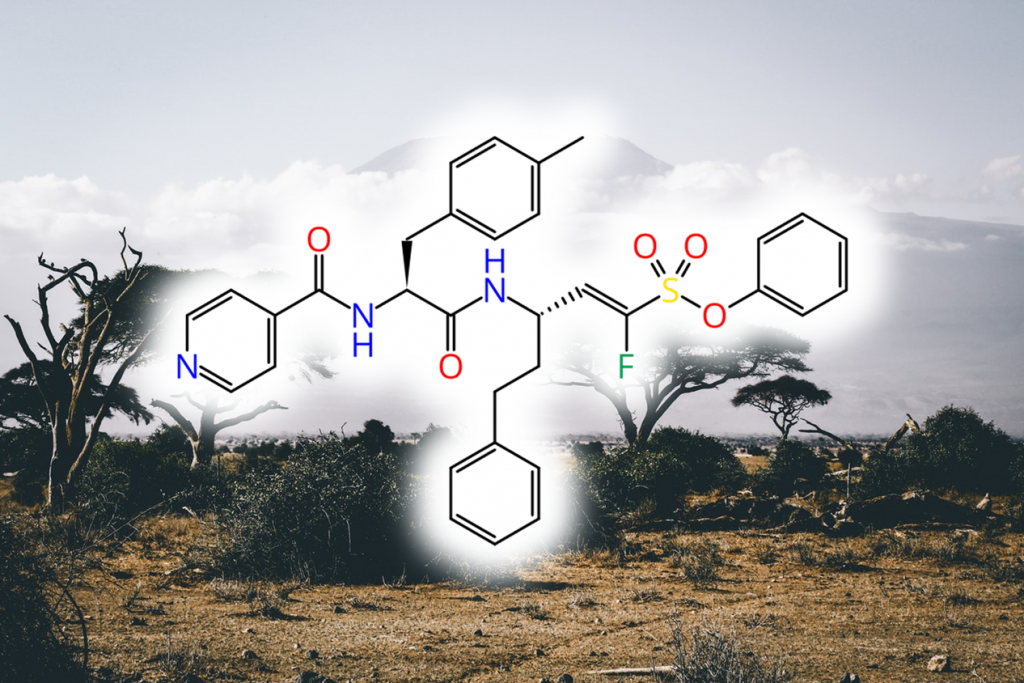
Human African Trypanosomiasis (HAT, African Sleeping Sickness) is a fatal, neglected tropical disease caused by the parasites Trypanosoma brucei. Most available drugs for treatment of the disease lack efficiency and have severe side effects. α-halovinylsulfones as covalent reversible inhibitors of the parasitic cysteine protease “rhodesain” have proven to be promising novel drug candidates.
Here, the team around Tanja focused on optimizing α-fluorovinylsulfones and -sulfonates for rhodesain inhibition using molecular modeling approaches. This resulted in highly potent and selective inhibitors with single-digit nanomolar affinity. The researchers further investigated the binding modes experimentally via MS experiments, indicating that the compounds are covalent-reversible, slow-tight binders. The different inhibition mechanisms of fluorinated and non-fluorinated compounds (reversible vs. irreversible) were investigated by QM/MM calculations and MD simulations.
In vivo studies revealed a favorable metabolism and biodistribution compared to non-optimized rhodesain inhibitors. Furthermore, they observed an anti-trypanosomal activity in the nanomolar range for inhibitors with an N-terminal 2,3-dihydrobenzo[b][1,4]dioxine group and a 4-Me-Phe residue in P2.


Current news

category
Software
Comparing the Performance of BioSolveIT and Alternative Technologies
August 4, 2026 09:21 CEST
Chemical Space Docking® (C-S-D) is designed for computationally efficient structure-based exploration of ultra-large Chemical Spaces. But how does it compare with other approaches? When searching ultra-large Chemical Spaces, computational efficiency and algorithmic strategies are crucial if trillions of compounds are to be screened for potential candidates. The approaches used to...
Read on
Tool of the Month - infiniSee xREAL
July 27, 2026 10:57 CEST
This August, Trillions Fit on Your Desktop This August, explore Enamine’s largest compound catalog with infiniSee xREAL as BioSolveIT’s Tool of the Month. Most screening campaigns are limited less by ideas than by the size of the catalog you can search. infiniSee xREAL removes that limit. It is the only...
Read on
category
Publications
New Publication: Strategies for Identifying Molecules of Interest in Large Chemical Spaces
July 14, 2026 11:25 CEST
In collaboration with Pfizer, our team recently published a study in the Journal of Chemical Information and Modeling. The work represents fundamental research into molecular similarity, extended to ultra-large, combinatorial Chemical Spaces. Read the Full Publication (Open Access) Which Central Questions Were Addressed? Which similarity-score thresholds are meaningful? How do...
Read on