







BioSolveIT and Proteros invite to a joint webinar with the title:
Hit Finding, Fast and Structure-Based — A Case Study on WRN Helicase
Crystallographic Fragment Screening Combined with Fragment Evolution Using Chemical Space Docking® into Enamine REAL
The speakers will report on a highly cost-efficient, novel hit finding approach towards active matter against Werner helicase (WRN), that yielded actives within merely 10 weeks after having found crystallographic fragment screening (CFS) hits; this includes the in-silico screening, synthesis, and assay measurements. The experimentally determined fragment-bound structures guided a Chemical Space Docking® campaign mining from 70 billion purchasable molecules from the Enamine REAL Space. Ordering, and testing including crystallization of the final selection concluded the workflow. Chemical Space Docking® corresponds to a reaction-driven assembly of building blocks and runs on standard hardware, without internet connection; template guidance is an optional functionality.
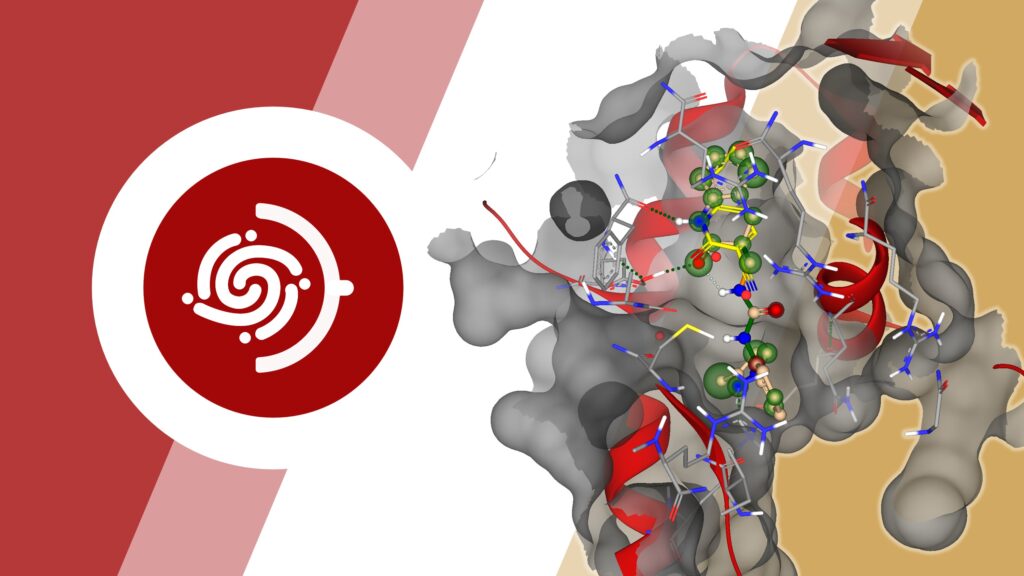
After prioritization from the in-silico approach, 45 molecules were ordered for synthesis, of which 40 (89%) could be delivered and arrived in less than 6 weeks. These were subjected to testing right away. 12 out of the 40 compounds showed binding in X-ray, 2 of which in a remote binding site. The determined binding modes largely agree with the docking hypotheses and preserve the key interactions of the fragment hits. Moreover, the resolved structures provide insights into binding site plasticity. We want to emphasize that it would not have been possible to identify these hits by any traditional/purely affinity-based finding and optimization campaign.
The presentation will detail the procedure with a focus on the basics of Chemical Space Docking®, and its integrated fuzzy template option that we used in this workflow.
With low synthetic investment compared to traditional bespoke synthesis, the approach proves to be a highly cost-effective way towards new active chemical matter in very short time.
Join us for an exciting webinar with valuable insights!
When you submit your data, it will be used in accordance with BioSolveIT’s privacy policy and Proteros’ privacy policy.